Summary article based on the “Sustainable Growth Roundtable” report, co-hosted by dsm-firmenich and Deloitte, October 2025.
The “Sustainable Growth Roundtable,” jointly organized by dsm-firmenich and Deloitte, brought together senior leaders from across China’s agri-food ecosystem—including finance, producers, NGOs, and academics—to address one of the most pressing challenges of our time: how to feed a growing global population sustainably, profitably, and responsibly. The event’s central message was clear: sustainability is the new frontier for growth, and measurable action is the key to unlocking value for all stakeholders.
With the world’s population projected to reach 9.7 billion by 2050, demand for animal protein is expected to rise by 70%. However, animal farming already accounts for approximately 14.5% of global greenhouse gas (GHG) emissions, and if current practices persist, the sector could consume up to 80% of the world’s total GHG budget by mid-century. Feed and nutrition are the primary levers for change, responsible for 50–80% of the environmental footprint and 50–60% of production costs in animal protein production.
The roundtable emphasized that “business as usual is not possible.” The sector faces mounting pressure from regulators, financial institutions, value chain partners, and increasingly conscious consumers to adopt sustainable practices and demonstrate measurable progress.
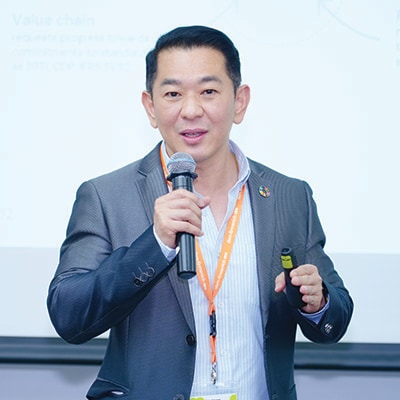
Dr. Mongkol Kaewsutas from dsm-firmenich Animal Nutrition & Health emphasized the shared commitment and need for urgent, measurable action to reduce emissions in food systems. The day was a pragmatic step towards unlocking commercial and environmental value of sustainability.
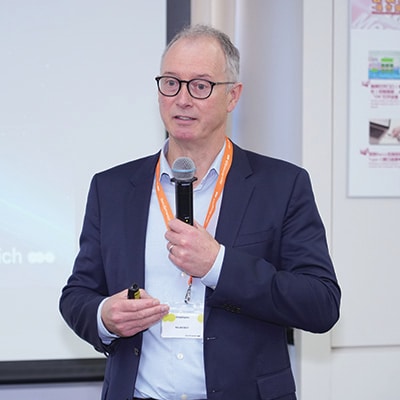
Dr. David Nickell showed how credible and accurate environmental footprint measurement unlocks business value.
A recurring theme throughout the event was the transformative power of primary data. Accurate, verifiable data enables agri-food businesses to convert farm inputs into actionable insights, optimize performance, reduce costs, and lower emissions simultaneously. This data-driven approach shifts the sustainability conversation from mere compliance to a clear business solution.
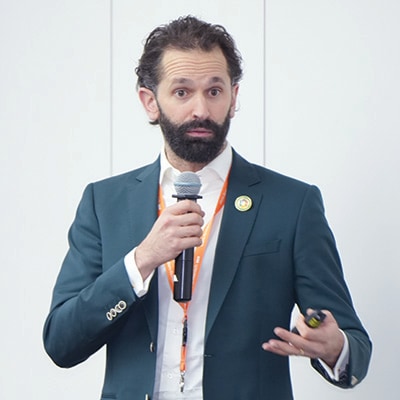
Daan van der Zanden of Deloitte highlighted that farm-to-shelf data is now a strategic asset, driven by regulatory requirements and technological connectivity. Automating and modularizing primary data capture—while safeguarding sensitive information—allows businesses to embed analytics into daily operations, unlocking operational gains and new financing opportunities.
The roundtable featured deep discussions on decarbonization challenges and China’s unique sustainability landscape. Panelists from organizations such as SGS, WWF, IFC, and CAAS stressed the importance of a shared definition of success: progress is inevitable when every partner wins. Independent verification and trusted data are essential to de-risk sustainability investments and turn ambition into bankable action.
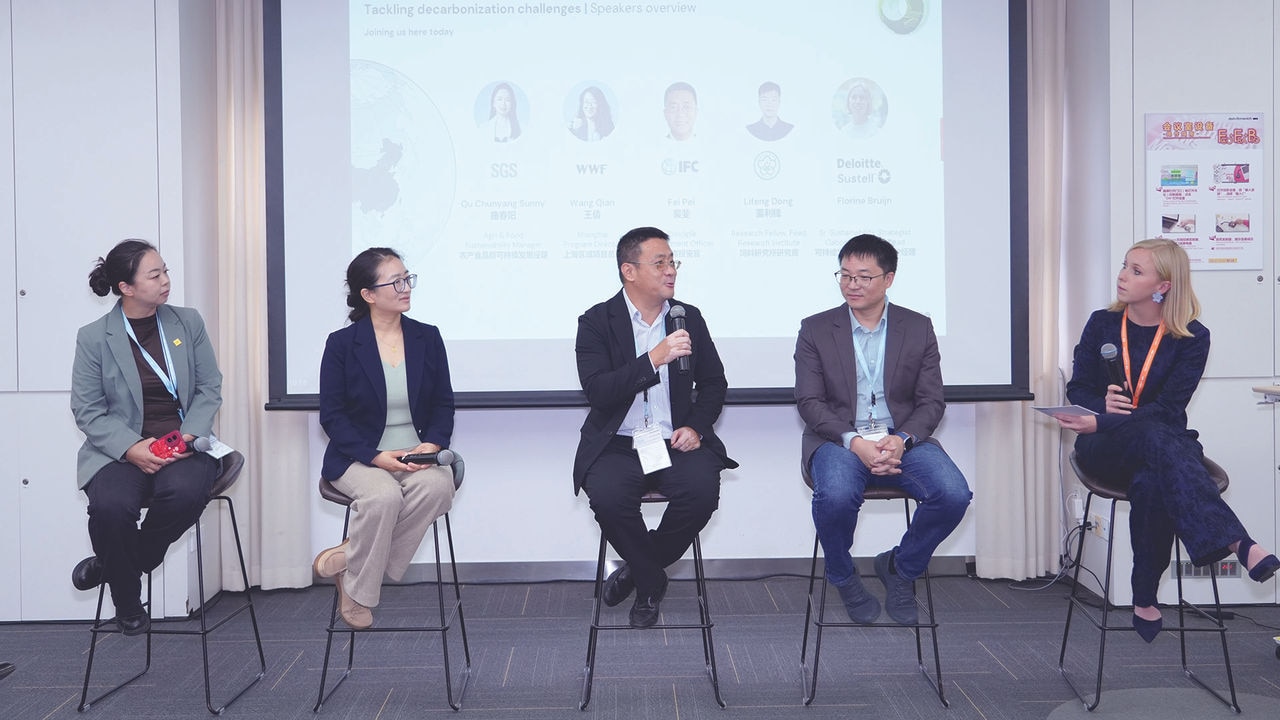

Florine Bruijn of Deloitte explained that most of the environmental footprint sits upstream in the value chain. The sector is shifting from offsetting to “insetting”—implementing emission reduction initiatives directly within the supply chain. This requires fair, shared-value incentives and collaboration across the entire ecosystem, from feed mills to retailers.
The event showcased how sustainability, when made measurable, can unlock new value for everyone. The SustellTM platform, developed by dsm-firmenich, was presented as a tool that democratizes life cycle assessment (LCA), making it accessible, credible, and scalable for companies of all sizes. Sustell enables compliance with evolving regulations, supports sustainable financing, and provides the data needed for eco-labeling and carbon accounting.
The SustellTM Carbon Value Program, a collaborative initiative between dsm-firmenich and Deloitte, was highlighted as a practical pathway to achieving sustainability targets. By focusing on nutritional solutions and leveraging ISO-assured measurement, the program delivers up to 10% CO2e reductions across species, with a positive return on investment. The program’s reduction protocol supports the credible measurement, certification, and transfer of reduced footprints along the value chain, enabling direct and indirect monetization with customers.
A key takeaway from the roundtable was the necessity of building a strong ecosystem to facilitate collaboration. Sustainability progress requires boardroom-level commitment, consumer demand to pull change through the value chain, supportive government policy, and financial institutions willing to accelerate progress through green and blue loans.
The event concluded with a campus tour of dsm-firmenich ANH China’s Innovation Lab, Food & R&D Lab, and practical demonstrations of sustainability solutions in animal nutrition—translating the day’s discussions into tangible action.
The Sustainable Growth Roundtable underscored that the winners in the sustainability race will be those who can prove their progress—precisely, credibly, and continuously. The future of agri-food is not built on promises, but on numbers. By making sustainability measurable, the sector can unlock new business opportunities, improve profitability, and ensure a resilient food system for generations to come.
04 December 2025